
Education, powered by sweet potato
27 April 2026
•By ChildFund Australia

When hunger shapes the school day
What does a school morning look like? For many children, it begins with small, familiar routines. Finding a uniform or choosing what to wear. Packing a school bag, sometimes carefully the night before, sometimes in the early morning. A reminder to eat something before leaving home.
These are ordinary parts of childhood. But in northern Kenya’s Turkana County, they are not always guaranteed.
In classrooms across the region, hunger is present before lessons begin.
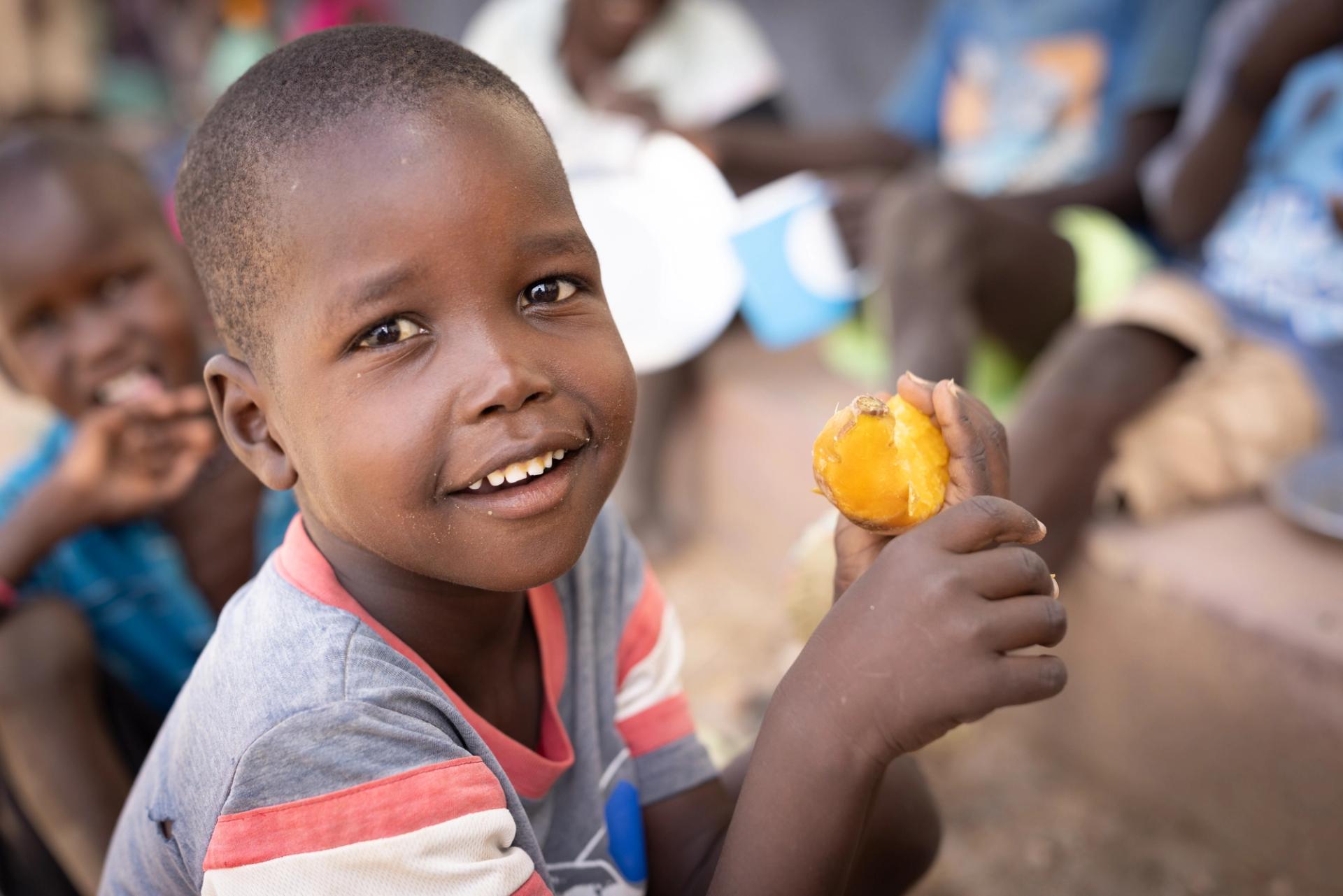
“School attendance among children in Turkana used to be very low because there was no food at school. Children would come hungry and return home hungry,” says Maria, a head teacher at a ChildFund-supported early childhood development centre in Turkana. “These days the children are doing well. They enjoy coming to school because there is food at school.”
Turkana is an arid region in Kenya’s north, where drought is a regular part of life. Across the Horn of Africa, repeated climate shocks have made food insecurity a constant pressure for many families. For children, that pressure shows up in a simple way: sitting in class while their stomachs are empty, trying to focus as lessons begin.
A meal that changes the school day
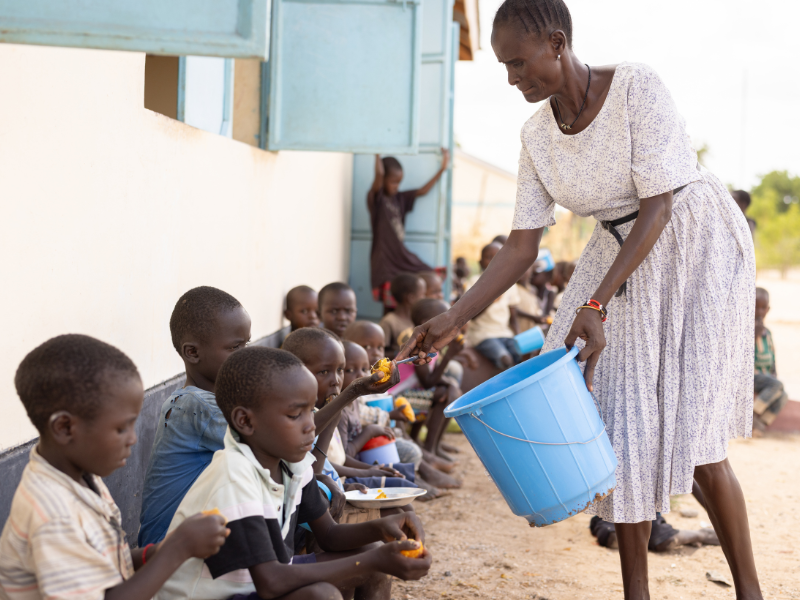
At Maria’s centre, that experience has started to shift. The school day now includes something simple but significant: a morning serving of porridge.
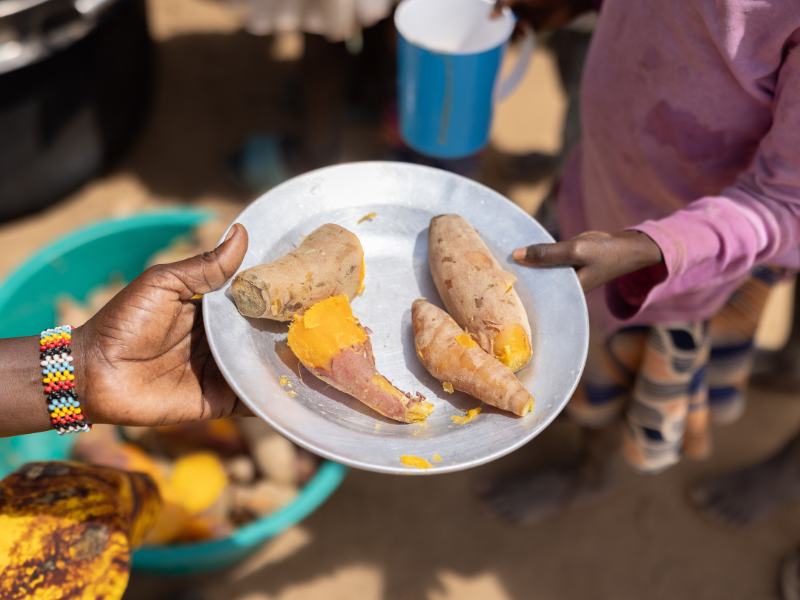
It is made from orange-fleshed sweet potatoes grown by local farmers, processed into flour and prepared as part of a school feeding program supported through ChildFund Australia and Frontiers Children Development Organization. Clean water systems have also been installed at several centres as part of the project.
Orange-fleshed sweet potato is rich in beta-carotene, which the body converts into vitamin A, important for children’s immunity and healthy development. School feeding programs are widely recognised as one of the most effective ways to improve attendance and learning in food-insecure communities.
But in Turkana, the change is most visible in the rhythm of the classroom itself.
From farms to classrooms
The program begins outside the school gates. Families grow orange-fleshed sweet potatoes, which are then purchased locally and processed into flour for school meals, linking farming directly with what children eat each day.
“It is not enough to just give farmers sweet potatoes and say, ‘Here you go,’” says Maurice Lokwaliwa, CEO of Frontiers Children Development Organization. “We had to provide training, water infrastructure, tools and market connections for this to work.”
The result is a system that connects farming, income and education in a single cycle, supporting both livelihoods and learning.
What changes in the classroom
In classrooms, the changes are gradual but visible. Children stay longer. Fewer leave early. Lessons run more steadily, and the school day becomes more consistent.
In project areas, malnutrition rates have fallen from over 30 per cent to around 19-21 per cent.
For Maria, the difference is clear in the everyday moments of the school day. The sweet potatoes are not just filling food. They are nutritious and energising, and help keep the children healthy and engaged here. Even if a child leaves home without eating anything, once the morning feeding time comes, she eats porridge and goes home feeling full,” she says.
What once disrupted learning now helps hold the day together. For children, it is simple: the ability to sit in class, concentrate, and take part without hunger pulling them away.
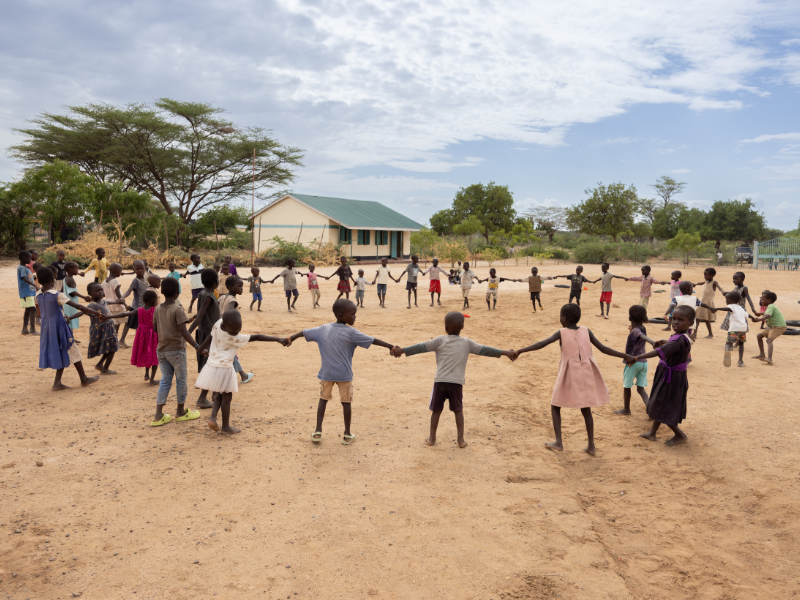
Children staying in school, for longer
In drought-prone regions like Turkana, even something as simple as a bowl of porridge can determine whether a child makes it through the school day. More children are now staying in school, supported by meals grown within their own communities.
And in places where hunger once shaped attendance, it is beginning to shape something else: the possibility of learning.
Find out how you can support more children to stay in class and learn each day.