

What 2026 looks like for children in crisis
28 January 2026
•By ChildFund Australia


Growing up in crisis
Every crisis threatens a childhood. And for millions of children around the world, 2026 is already shaping up to be a year of uncertainty, loss and resilience.
As we enter a new year, one fact is impossible to ignore: children are facing the highest levels of need in modern history. Last year alone, 7.7 million children were born into humanitarian crises and 83 million people were forced from their homes. For many, crisis begins with loss – a school closed, a home swept away, a childhood interrupted in minutes
At ChildFund Australia, together with our local partners and the global ChildFund Alliance, we are committed to protecting children and helping communities rebuild across 36 countries. Your support helps us deliver essential programmes including:
- Child protection programmes to keep children safe
- Education in emergencies – from temporary schools to learning kits
- Disaster preparedness and risk reduction
- Health, nutrition and safe water programmes
- Cash and voucher assistance for families
Want to know more about the above? ChildFund Australia’s Director of Programs, Sophie Jenkins, answers the questions we hear most.
Gaza – Safe spaces for children
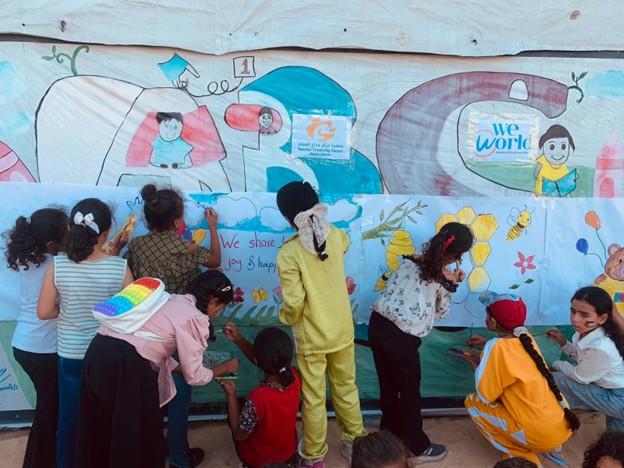
Nearly 92% of schools in Gaza have been damaged or destroyed, leaving 650,000 children without formal education and over a million in need of psychosocial support.
Through our partner WeWorld, we create temporary learning spaces, deliver education and psychosocial care, and train teachers and caregivers.
“It is the only place I feel safe,” says 8-year-old Hiba*, pictured above, who can now attend school for the first time after two years of conflict.
For Asad*, also 8, ChildFund’s learning spaces have brought back a sense of joy.
“I didn’t have a school before, now I enjoy learning with my friends.”
Afghanistan – childhood interrupted
Ongoing conflict continues to disrupt the lives of millions of children in Afghanistan. Schools close, daily routines collapse and many children take on responsibilities far beyond their years. Girls are particularly at risk of losing access to education and safe spaces.
Since 2021, ChildFund Australia has supported children and families through local partners. We provide cash transfers for food, hygiene and school supplies, distribute essential household kits and create safe spaces for children to learn and play.
Bangladesh – Cox’s Bazar
In the world’s largest refugee camp, Cox’s Bazar, ChildFund Australia and local partners such as EDUCO provide safe spaces and clubs, access to schooling and vocational training, clean water, sanitation and emergency support. Through these programmes, children learn about their rights, play and build resilience every day.
Ukraine – Winter in crisis
Since 2022, ChildFund Alliance partners WeWorld, Educo and ChildFund Deutschland have been providing food, medical supplies, blankets, heaters, emergency shelters, and child-friendly safe spaces for learning and psychosocial support.
Every week, over 8,000 people receive essential packages. Hundreds of thousands of households remain without electricity as winter temperatures can drop to -20°C. More than 2,800 schools have been damaged or destroyed, leaving 4.6 million children facing barriers to education.
The crisis is far from over
- 1 in 4 children lives in a country affected by conflict or disaster
- Children in crisis account for nearly half of all under-five deaths
- Around 339,000 children are born into refugee life each year
- Crises continue to destroy homes, schools and livelihoods, driving severe food insecurity
- Millions of children face heightened risks of violence, displacement and malnutrition
Every minute matters. Your support helps children not just survive but rebuild their lives, reclaim their childhoods and access the education, safety and care they deserve.
Data sources: United Nations, Mid-Year Global Humanitarian Overview 2025
*Names have been changed to protect individuals’ identities