
Behind the Impact: Amelia Eko
2 October 2026
•By Emily Freedman

Help remove barriers to learning
Behind the Impact.
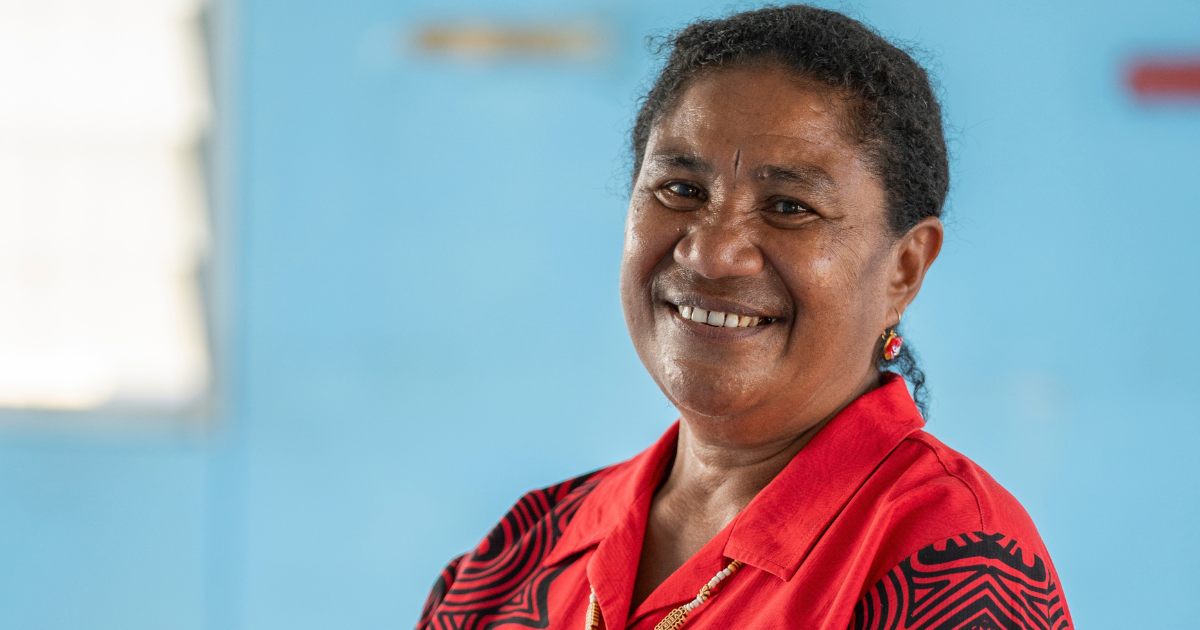
Creating real change for the children, families and communities ChildFund Australia supports doesn’t happen alone. It takes a team working across borders, timezones and challenges. Our Behind the Impact series gives you a closer look at what drives our team. To celebrate World Teachers’ Day, we spoke with Amelia Eko, a teacher with nearly four decades of experience in Papua New Guinea, about her first year as a school leader, the lessons she’s putting into practice and what she hopes comes next.
A lifetime in the classroom
Teaching has been a big part of my life for 37 years, through my marriage and while raising my children. Now, being a head teacher is another chapter for me. I’m still learning and growing in this role, and I’m thankful for the knowledge and experience that helps me support my school.
Once a student, always a student
I have learned a lot through the School Leadership and Management Training workshops ChildFund has run. I’ve also learned a lot from the new policies that are coming up, like the behaviour management policy.
I took what I learned from the workshops and put it into practice, working with the parents and the board management to develop our school. I am so thankful for all this knowledge. It is helping me as a head teacher, especially as a new head teacher here, and helping me to develop this school.
When students take ownership
When I first arrived, I saw a lot of challenges with student discipline, so I called a PNC meeting and we developed a behaviour management policy. But the parents and children helped make the rules themselves. It wasn’t just the board or the teachers deciding.
One of the rules was that students should be at school by 7am. Because they had helped create the rules, they took ownership of them and understood that they needed to follow them too. That made me very proud and showed me that when students are involved, they are more willing to take responsibility and help develop the school.
When parents get involved
I invite parents to come and support the programs we run at the school. When I call for meetings, at least half of the community comes to support the school. Parents also bring their own skills and experience – one father helped us with the plumbing when we were getting our water system working again.
This year, when we celebrated our school feast day, a good number of parents came. We celebrated with Mass, marched with our banners, and the parents cooked and brought food.
When I see parents coming in and supporting the school, I’m very happy. And when we all play a part in keeping our school running, we can see real changes. Today, water is flowing again, and the students were able to use the taps and toilets. That was one very big change for me.
Meeting the needs of a growing school
There are many things I’m looking forward to at my school. As more children join us, I want to see our classrooms, facilities and learning resources keep pace, so every child has the space and materials they need to learn.
I also want to keep supporting our teachers with the resources they need to plan and teach with confidence. Having more teacher guides, syllabuses and textbooks would give us more tools to make our lessons interesting and help our students explore new ideas. At the moment, we don’t have enough textbooks, so sometimes our teachers have to write information on the chalkboard for the students to copy.
The school she wants to build
I want our school to be a place where children can learn well and our teachers can do their best work. I want the parents and the community to continue being involved with the school and supporting our children. My hope that, one day, our school will be one of those model schools that will produce results for our community.
This interview has been edited and condensed for clarity.
The Partnerships for Improving Education program is funded by the Australian Government through the Department of Foreign Affairs and Trade.