
Their voice, their safety: how young people shaping online safety across Asia-Pacific
24 August 2026
•By Zoë Taylor

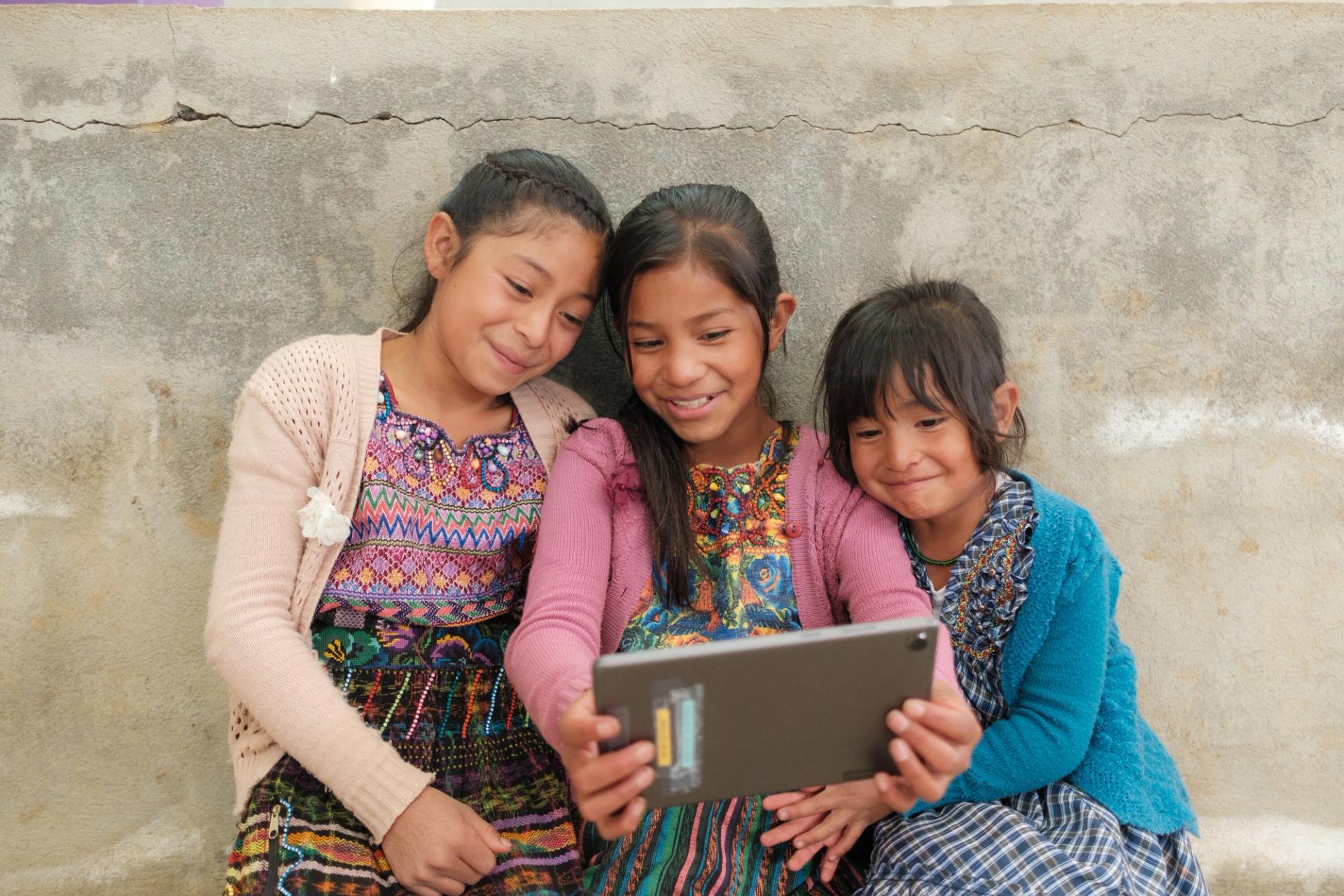
Their voice. Their safety.
"Online" isn't a separate part of life anymore. It’s where children and young people do homework, talk to friends, and figure out who they are. It’s where life happens.
But for millions of children across Asia-Pacific, that same connection can also bring new risks: cyberbullying, grooming, exploitation, and harmful content, often with no adult nearby who knows how to help.
Girls, children with disabilities, young people growing up where internet access has outpaced any safety net at all, are the most exposed and most often overlooked. Girls, children with disabilities and young people growing up in communities where internet access is expanding faster than the support to keep them safe can face greater risks online, while having fewer people and resources to turn to.
“I feel a bit unsafe when someone sends me a message online asking where I am, what's my name, and that they like me."
–Timor-Leste child, ChildFund/Plan International Australia, Western Sydney University research
At ChildFund Australia, we believe every child should be able to explore the digital world without fear. So, we're working with children, families, and local partners across the region to close that gap, one conversation, one classroom, one phone call at a time.
The challenge
Internet access across our program countries is growing faster than systems to keep young people safe. Most schools and communities haven't caught up, which means children are often navigating real risks alone. And the children already facing disadvantage are the ones most likely to be targeted.
Grounded in research, not guesswork
We didn't assume what children needed – we asked them. Alongside Plan International Australia and the Young and Resilient Research Centre at Western Sydney University, we researched online risk and safety with young people across the Pacific and South-East Asia.
We found children are confident online – and broadly aware of the risks – but confidence doesn’t always come with the skills to stay safe. Their parents and carers, meanwhile, may lack the digital literacy and confidence to know how to help. Swipe Safe was built to address both gaps.
Our approach: local knowledge, lasting change
We work alongside local partners, community organisations, schools, and governments, who understand their own communities best. That means training local youth facilitators, handing decision-making to the people closest to the problem, and building systems that keep working long after a project ends.
Swipe Safe: speaking children's language
To reach families where they already are, we needed more than a poster or a lesson plan, we needed to speak their language. That's what led to the creation of our Swipe Safe app, bringing our established program and curriculum into the digital spaces children navigate every day. The app teaches children how to spot risk, protect their information, and know where to turn if something feels wrong.
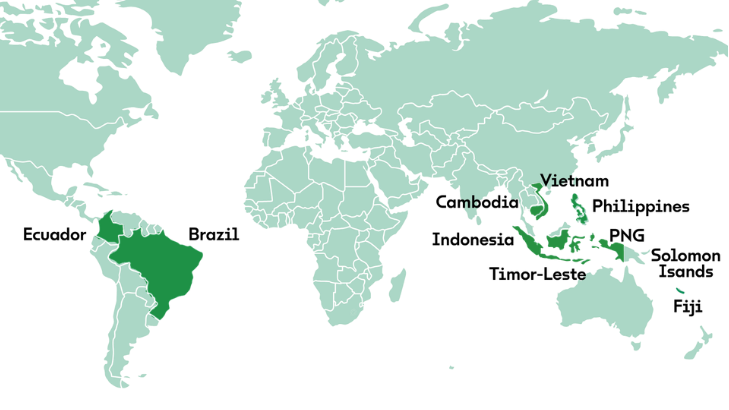
It's designed to work everywhere, as a standalone tool for kids with a phone in their pocket, or alongside lessons run by trained youth facilitators in schools and communities across Vietnam, Cambodia, Timor-Leste, Solomon Islands, and Indonesia. Recently, the app was also launched in the Philippines, Brazil, and Ecuador.
How the training works
Swipe Safe uses a peer-to-peer model – tech-savvy local youth, trained and supported by ChildFund staff, leads younger participants through three hands-on sessions using training smartphones. They start with the six “Sacred Stones” – simple concepts like what's public, what's permanent, and who to trust online – then move into responsible online behaviour, and finally into recognising and responding to serious risks like grooming and cyberbullying.
Parents, caregivers, teachers, community leaders and frontline workers get their own tailored training too – because a child is only as safe online as the adults around them are equipped to help.
Swipe Safe has already reached more than 60,000 people
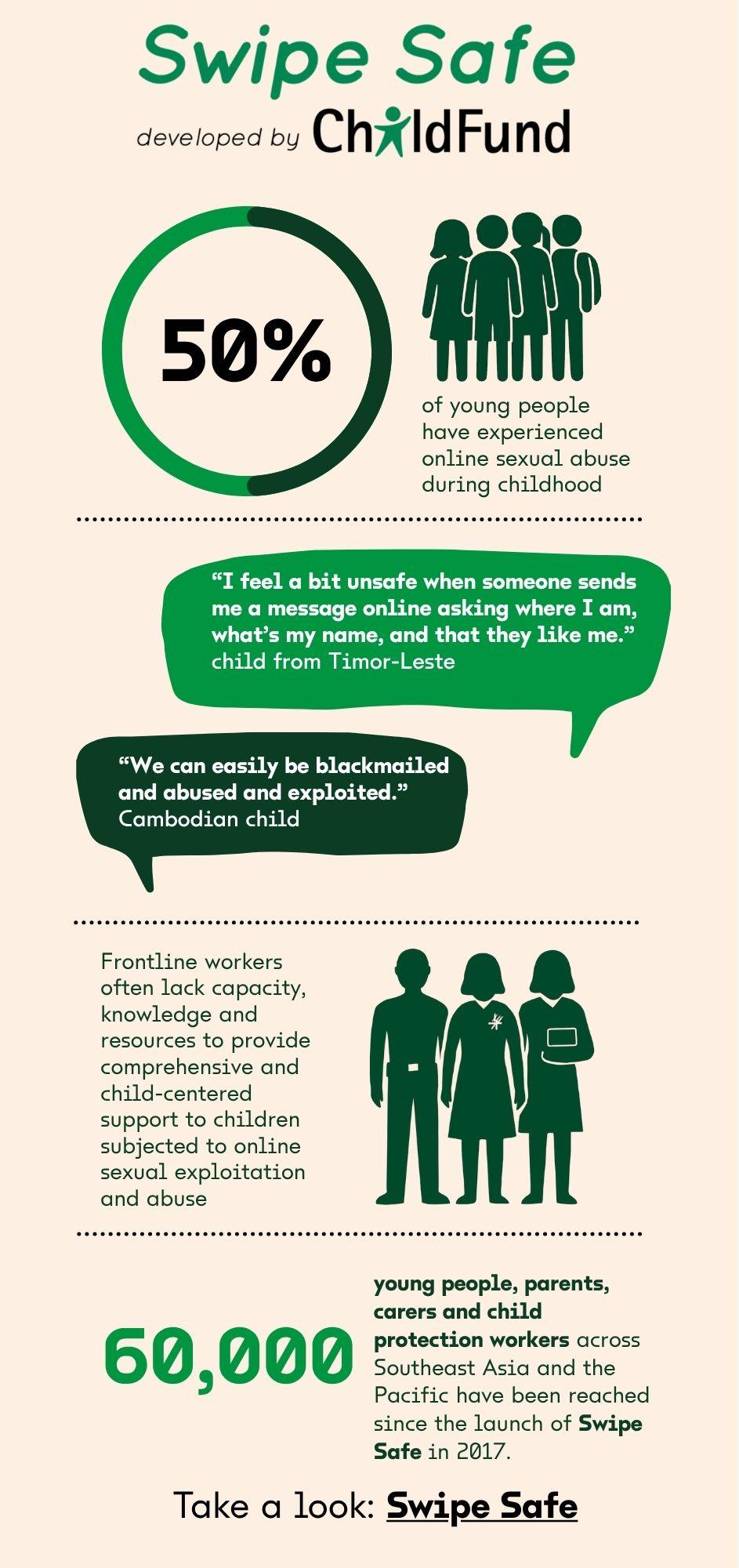
The Swipe Safe app takes those same ideas and turns them into something kids actually want to use: 12 bite-sized learning modules built around choose-your-own-adventure scenarios, where young people give advice to a friend facing a risky situation online. It's free, and it's written in the language young people actually use – slang, emojis and all.
Swipe Safe isn't just an app. It's built on two connected parts: a set of training manuals, and the app itself. The manuals come first, designed for children and young people, then parents and caregivers, then frontline workers, so that everyone around a child is equipped to help keep them safe.
"With children, you want to make sure that everyone around them is also empowered and capable to help, that's why we have training manuals for children and young people, for parents and caregivers, and for frontline workers, so it's a truly holistic approach,” explains Amy Utomo, Regional Swipe Safe Officer, who leads our regional work on online safety and technology-facilitated violence across Southeast Asia, with a focus on youth-led prevention and safeguarding systems.
“I've seen children lining up at our exhibition showcases just wanting to try Swipe Safe. It's such an important initiative in the midst of the increasing trends of online harm, especially with how fast AI is progressing."
Supporting the next generation of leaders
Swipe Safe youth facilitators are going on to become online safety advocates in their own right – working with governments to get online safety embedded in national education curricula and legislation.
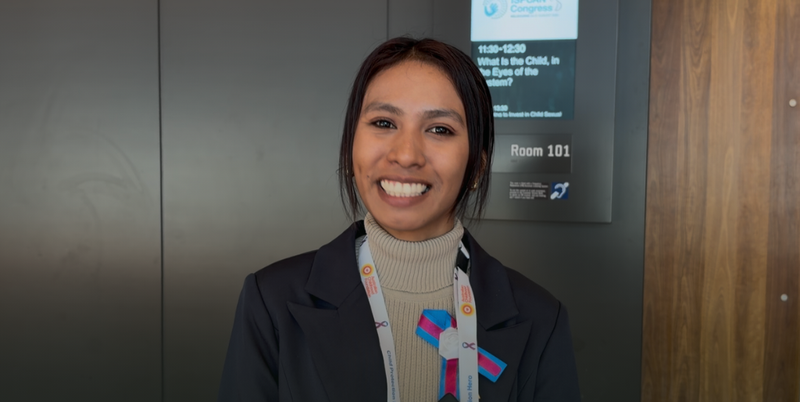
As a Swipe Safe Youth Facilitator in Timor-Leste, Jolcia delivers online safety education to children, young people, and parents, helping them build the knowledge and practical skills needed to navigate the digital world safely. She also supports community awareness initiatives, facilitates interactive learning sessions, and promotes positive digital citizenship while encouraging open conversations about online risks and where to seek help.
Jolcia is also a member of the Alumni Parlamento Foinsa’e Timor-Leste (APFTL), a youth-led organisation that brings together more than 600 young leaders across Timor-Leste. Established in 2015 and formally registered in 2016, APFTL is committed to empowering Timorese youth to become active citizens and meaningful contributors to sustainable development.
"Nearly 60 per cent of Timor-Leste's population is under 25. We're not just the future; we're the majority right now. If young people aren't part of the conversation about our own online safety, decisions get made about us without us. That's why representation matters: our voices need to help shape the policies, the curriculum, and the protections that are meant for us," she says.
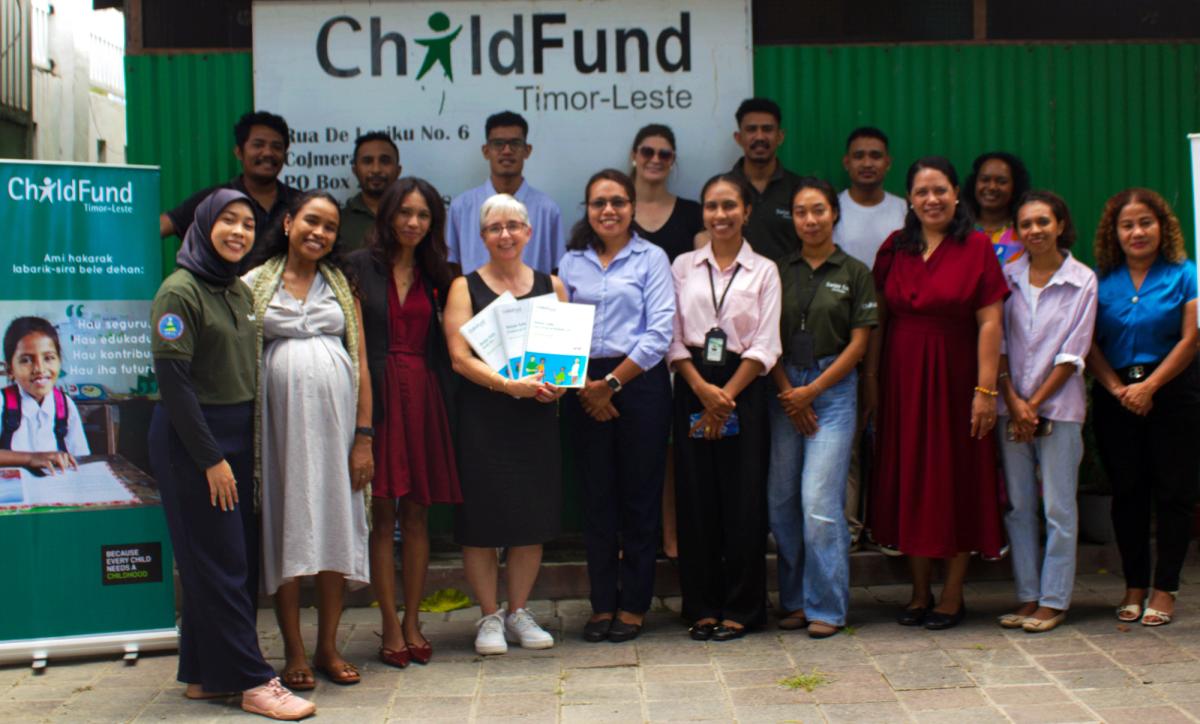
Jolcia has collaborated with national and international organisations to advance child protection, youth and women's empowerment, climate justice, and community development through education, leadership, and inclusive participation.
The facilitators shared their experiences directly with the Ambassador, speaking candidly about cyberbullying, misinformation, and the risks of non-consensual image sharing. They also walked the Ambassador through the Swipe Safe app and how it helps young people like themselves better understand online risks. “Moments like this matter, as creating safer online spaces isn’t only about technology or policy. It’s about ensuring young people, especially young women, are part of the conversations shaping the digital world they live in,” said Amy Utomo reflecting on the visit. “What stood out to me most was seeing the young facilitators lead the conversation with such confidence and honesty.”
None of this works in isolation. A child is safest when the systems around them, their community, their school, their government, and yes, their apps, are all working together.
That's the goal behind everything we do in online safety: not just protecting children from harm but helping them grow into confident young people who know their rights, recognise danger, and aren't afraid to ask for help.