
Making room for every child to learn
24 August 2026
•By Emily Freedman

Removing barriers to education.
For years, Srey Oun* copied every lesson her teacher wrote on the board.
Her handwriting was beautiful.
She just didn’t know what the words meant.
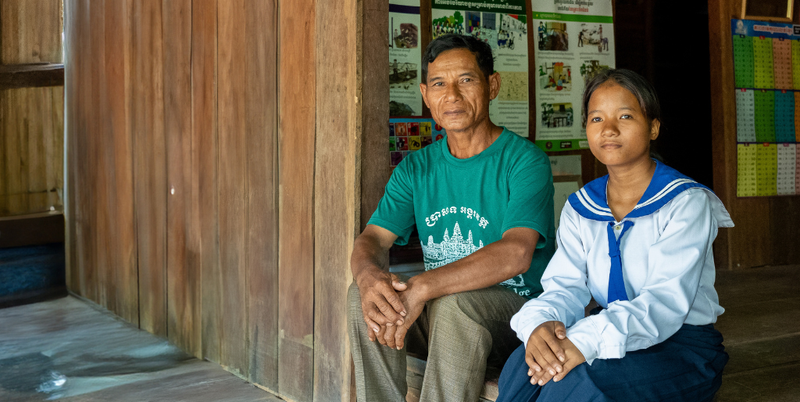
Srey Oun was born deaf and grew up in rural Cambodia, where nobody around her knew sign language – not her teacher, her classmates or even her family.
At school, she watched other children answer questions, talk, laugh and play. She copied what she saw in her notebook but had no way to ask questions or explain what she wanted to say.
Her classmates could not explain their games to her, so she often sat and watched.
She wanted to learn. She wanted to connect. But the people around her didn't know how to include her.
Her father could not call out to tell her he was going out to work or ask if she was hungry or safe.
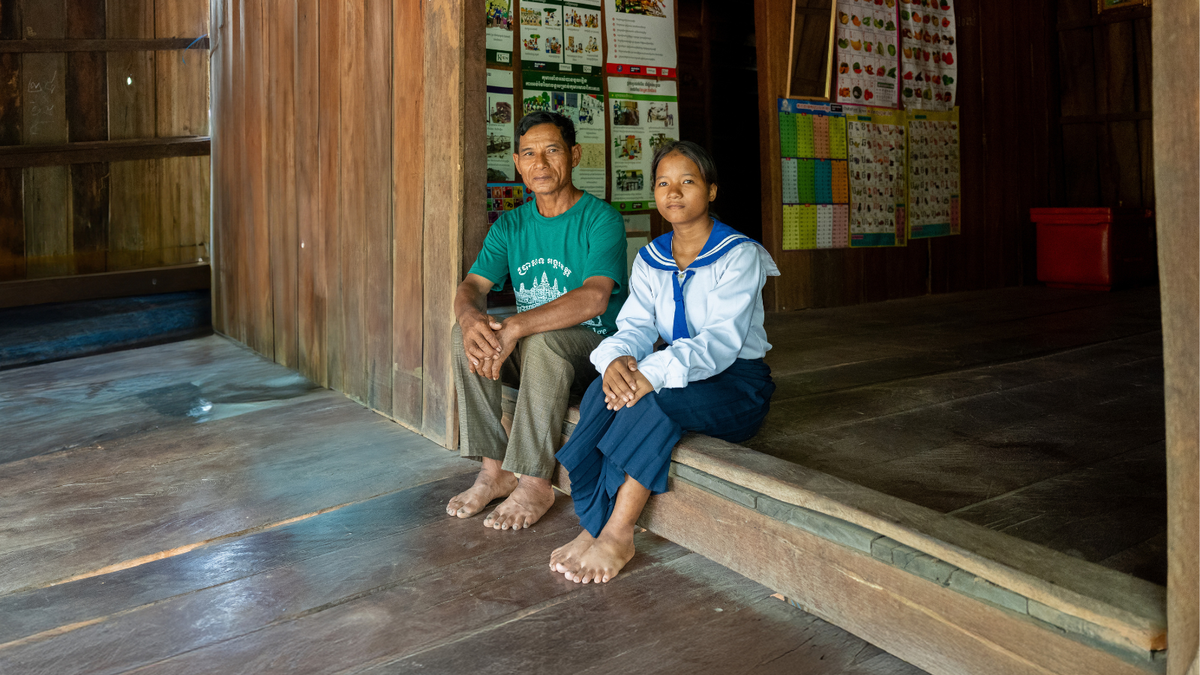
“When I leave for the fields in the morning, I cannot call out to tell her where I am going. I cannot ask if she is hungry, or check that she is safe,” he says.
That began to change when Srey Oun started attending a special education school where teachers could communicate with her through sign language.
Through the Disability Empowerment and Education Project (DEEP), ChildFund and local partner KHEN are supporting schools and communities across rural Battambang to make education more inclusive for children with disabilities.
Since DEEP began, 5,062 children with disabilities have been reached across rural Battambang. A further 175 children have Individual Education Plans, while 86% of teachers in DEEP-supported schools have received training in inclusive teaching practices.
For Srey Oun, having teachers who could communicate with her changed what was possible in the classroom.
She could ask questions. She could share her thoughts. She could learn in a language she understood.
“In just one semester, it feels as though she has changed 180 degrees,” says her teacher, Rem Rina.
Before, Srey Oun would give up when people did not understand her. Now, she asks questions, shares her thoughts and participates in class. She also approaches other children to join their games. If she does not understand the rules, she speaks up.
“I have a lot of friends at my new school. I’m learning so much more now.”
Her father has noticed the difference, too.
“Since starting at the Special Education School, she has gained more knowledge and understands considerably more than she did before. She has friends. She comes home happy.”
“In just one semester, it feels as though she has changed 180 degrees.”
– Rem Rina, Srey Oun's teacher
For children with disabilities across rural Cambodia, getting into school is only part of the challenge. 61% of children with disabilities are not in primary school, while nearly 30% of children with disabilities over the age of seven have never attended school.
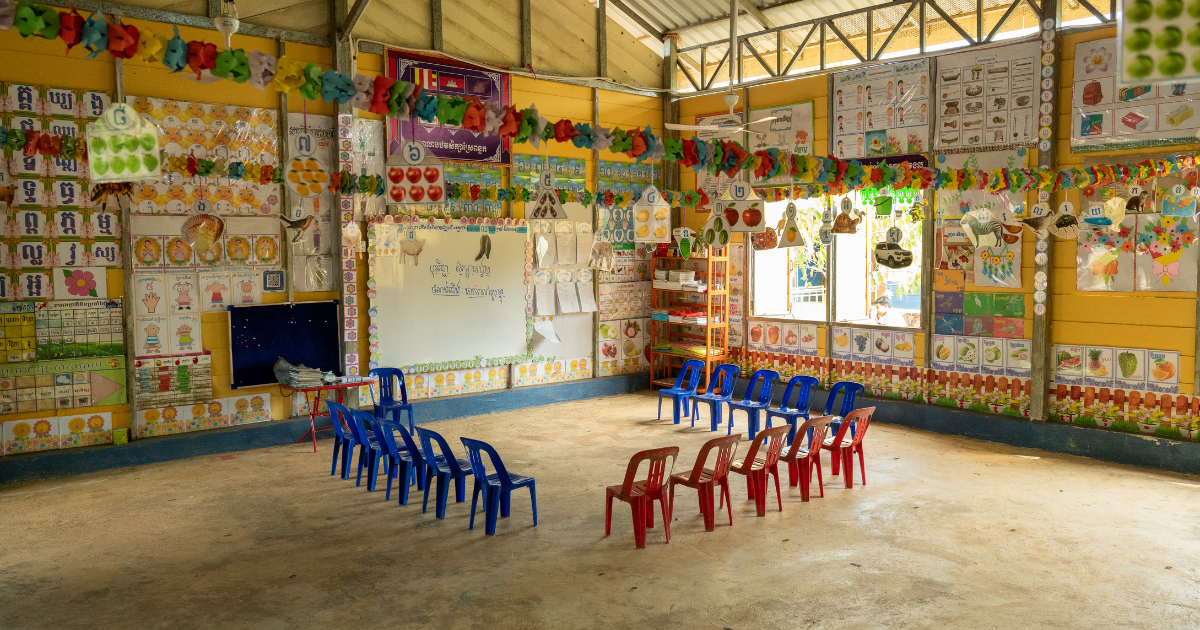
But being in school does not always mean being able to take part. A teacher may not know how to adapt a lesson. A classroom may not be accessible. A child may be left on the edges of classroom life simply because their needs are different.
Bros Aun*, 16, knows what that can feel like.
There was a time when he was scared to go to school. Born with a physical and intellectual disability, he was teased by other children because of the way his eyes and mouth looked. His teachers struggled to support his learning needs, and he fell behind.
Things began to shift through DEEP. His teachers received training in inclusive education, Bros Aun moved from the back of the classroom to the front and he received additional learning support at home. KHEN also worked with the community to build greater understanding of disability and the rights of children with disabilities.
Today, school looks different for Bros Aun. He touch-types with confidence, plays soccer with his friends and enjoys going to school.
And he knows what he wants to do next.
“I can play with my friends. We make jokes and laugh together,” he says. “I want to become an engineer.”
Srey Oun needed teachers who could communicate with her. Bros Aun needed teachers who understood how he learned. Inclusive education starts with recognising that those needs are different.
“I want to become an engineer."
– Bros Aun, 16
Through DEEP, children can receive Individual Education Plans built around their learning needs, while teachers receive training in inclusive education and schools are supported to make learning environments more accessible.
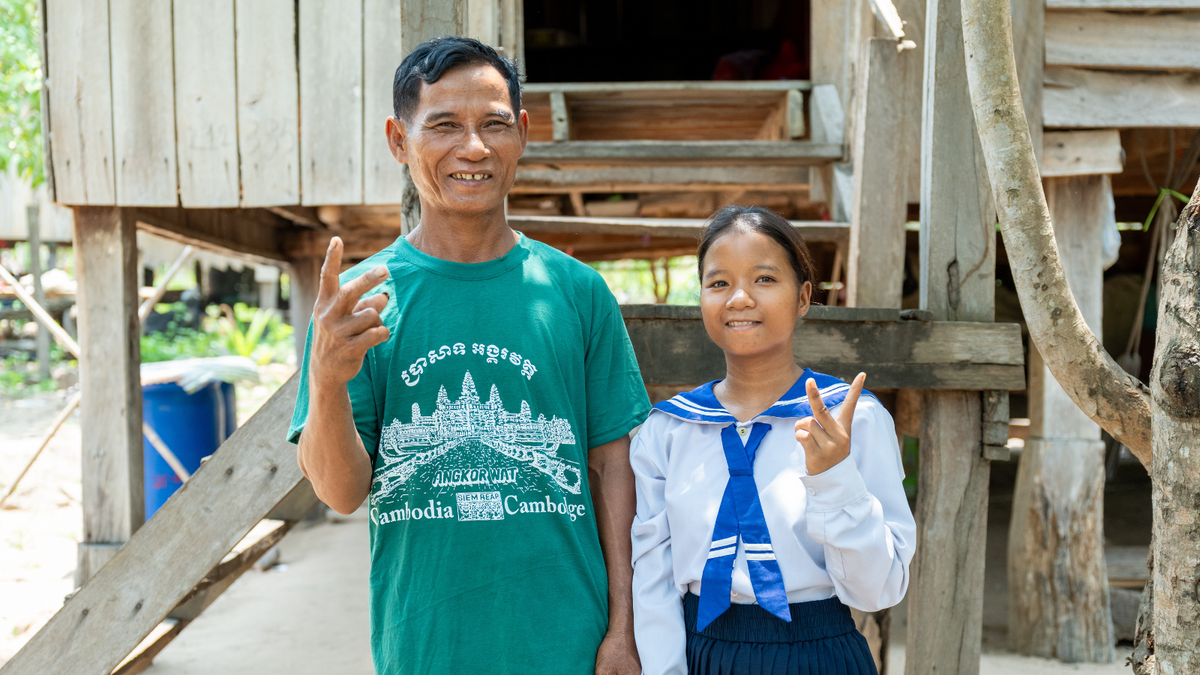
For Srey Oun’s father, those changes have also shifted how he thinks about her future.
“I am not a young man. I often think about what will happen to Srey Oun when I am gone – whether she will be able to work, whether she will be able to look after herself,” he says.
“I believe she has a chance now.”
ChildFund Australia acknowledges the support of the Australian Government for the implementation of the Disability Empowerment and Education Project (DEEP), in partnership with local organisation KHEN Cambodia.
*Names changed to protect identity.