

What’s the difference between an asylum seeker and refugee?
13 May 2026
•By

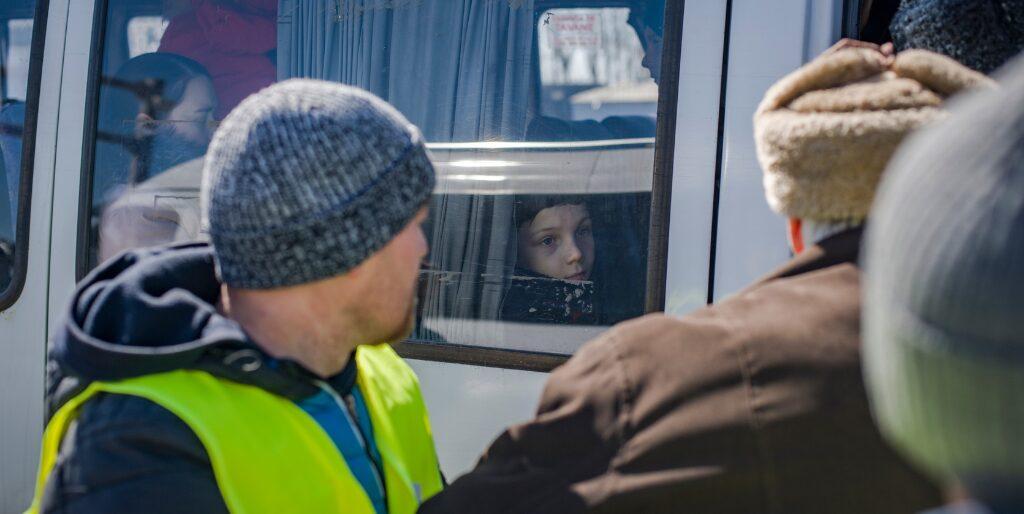
Today people all over the world are making the hardest decision of their lives – to flee their homes and leave behind everything they’ve built in the hope of finding a safer, better future.
Globally, more than 117 million people have been forcibly displaced, including around 37 million refugees, according to UNHCR data. Children make up around 40 per cent of displaced people, meaning millions are growing up away from the safety and stability of home. Among refugees, around 1 in 3 is a child.
When a child is forced to flee their home, they lose almost everything. They often are at a greater risk of:
- being unable to go to school,
- a wide range of child protection risks,
- violence and abuse including forced marriage,
- child exploitation, and;
- gender-based violence.
As the number of refugee and asylum-seeking children reach record highs, ChildFund is collaborating with partners in countries such as Moldova, Uganda, and Bangladesh to ensure that all forcibly displaced children can keep learning, stay safe and enjoy their childhood.
Each year on 20 June, the world marks World Refugee Day. An international day designed to champion the rights of refugees and asylum seekers to seek safety and advocate for long term solutions to forced displacement.
This World Refugee Day, join us in shining a light on the rights and needs of refugee children. Together, we can help refugee children keep learning, stay safe and realise their rights.
What’s the difference between an asylum seeker and a refugee?
With UNHCR predicting that 130.6 million people will be forcibly displaced because of violence, persecution, or disasters by the end of 2026, it is important to know the difference between types of forced displacement. This is because whether a person is classified as a refugee, asylum seeker or internally displaced person will impact the type of support they receive from governments and international organisations like the UN.
What is an asylum seeker?
An asylum seeker is someone who:
- has crossed an international border,
- and is seeking international protection as a refugee,
- but their request for refugee status has not been approved.
All people fleeing war, conflict or repression and seeking protection in another country should be treated equally, no matter where they are from.
What is a refugee?
Refugees are those who:
- have been forced to flee their country,
- and cross an international border because of war, violence, or a well-founded fear of persecution because of their race, religion, nationality, political opinion, or membership in a particular social group.
- To become legally recognised as a refugee, an individual must apply for asylum.
Therefore, while all refugees were once asylum seekers, not all asylum seekers will receive refugee status.
Refugees are often unable to return home or would face threats to their safety if they did.
In international law, refugees are protected under the 1951 Convention related to the Status of Refugees, which outlines the basic rights that must be afforded to all refugees by national governments. States that have signed the 1951 Convention are obligated to protect refugees and ensure their rights are respected. This means that recognised refugees should be granted the same rights as citizens in the country they are awarded asylum.
What is a forcibly displaced person?
Most forcibly displaced people never cross an international border and instead remain within their own country. Children, families and communities can be displaced for a range of reasons, including conflict, violence or disasters. As of 2025, an estimated 67.8 million people were internally displaced worldwide, according to UNHCR data, highlighting the scale of a crisis where most people forced to flee remain within their own countries.
Do asylum seekers have the same rights as refugees?
When we talk about the difference between an asylum seeker and a refugee there can be confusion about the similarities and differences between the two terms. When listening to the news or reading articles on migration, you might notice the terms refugee and asylum seeker being used interchangeably to describe someone who is seeking protection in another country. Yet, asylum seekers and refugees have distinct legal statuses, which impact their rights and protections. This makes it important for us to know the similarities and differences between the two categories.
Let’s delve into the similarities and differences.
Rights of Asylum Seekers
During the asylum process, asylum seekers often face uncertainty and vulnerability, and the rights afforded to asylum seekers can vary from country to country. Asylum seekers from Africa, Asia and the Middle East are often at a greater risk of being denied access to relief and support services when they are seeking asylum.
However, some common rights include:
- The right to non-refoulement: This means that asylum seekers cannot be forcibly returned to a country where they face persecution while their asylum claim is being processed.
- Access to basic services: While their claim for asylum is being assessed, asylum seekers should have access to basic services, including healthcare, education, and housing.
- Work authorisation: In some cases, asylum seekers can work while their application is pending.
- Freedom of movement: Asylum seekers can move within the host country.
Rights of recognised refugees
Unlike an asylum seeker, a refugee is officially recognised in international law under the 1951 Convention relating to the status of refugees to be a refugee. This grants a refugee access to the same rights as nationals in the country they have sought asylum, including:
- Right to Work: All refugees have the right to seek employment. However, refugees can face a variety of challenges securing employment, including discrimination, their qualifications and skills not being recognised in their new country, having limited knowledge of the local job market and limited networks to connect them with potential employers.
- Right to Access to Social Services: Refugees have the right to access social services, including education, healthcare, and social support.
- Freedom of Movement: Refugees can travel within and outside the host country.
- Family Reunification: When refugees are forced to flee their homes, they can remain separated from their families for years. Governments have a responsibility to reunite families through refugee family reunification processes once an individual is granted refugee status.
Regardless of how or in what country a refugee or asylum seeker arrives, everyone has the right to seek asylum in another country. The right to seek asylum is a fundamental human right; however, in lots of countries including Australia the internationally recognised right to seek asylum is not always honoured. ChildFund Australia works to support and advocate for the rights of both groups, recognising their unique needs and vulnerabilities.
The rights and protections of refugees’ vs migrants
The terms ‘refugee’ and ‘migrant’ are often used interchangeably; however, the two terms have vastly different legal connotations. Migration is often understood to be a voluntary process, in contrast, a refugee is forced to cross international borders and seek protection in another country due to persecution or conflict and as a result, refugees are owed specific protections under international law.
Migrants move to a different country for a variety of reasons, including:
- to work,
- study,
- join family, or
- because of poverty,
- political unrest, or
- climate-related disasters.
Unlike refugees, migrants can safely return to their home country if they choose. Countries manage migration under their own immigration laws. However, while there is no internationally accepted legal definition of a migrant just like refugees, migrants are entitled to have their human rights protected and respected in the country they move to.
Different types of forced displacement and refugees
- Refugees: Those who have fled their home countries due to persecution or conflict. There are also Religious or Political Affiliation Refugees who are fleeing discrimination based on race or political beliefs. War Refugees, who escape conflict for safety and peace.
- Asylum Seekers: Individuals seeking international protection but awaiting official recognition.
- Internally Displaced Persons (IDPs): Forced to find new places within their own country due to war or disaster.
- Stateless Persons: An individual living without nationality or identifying documents. Asylum seekers, refugees, IDPs and migrants could also be stateless.
- Economic Migrants: An individual who is moving for financial reasons but not fleeing persecution.
How ChildFund supports refugees and asylum seekers
Globally, children make up around 40 per cent of the world’s displaced people. Many spend years in displacement, facing interrupted schooling, limited access to healthcare and a lack of safe places to play.
ChildFund works with partner organisations to respond to humanitarian crises and conflict, address the protection risks refugee children face and advocate for children’s rights. We help transform living conditions for refugees residing in camps, minimise protection risks and create safe spaces for refugee children to play and learn.
Championing the rights of displaced children
David's Story
When war broke out in Ukraine, millions of people were forced to flee their homes. As of 2025, an estimated 3.8 million people remain internally displaced within Ukraine, and around 5.3 million people have become refugees across Europe and beyond.
David’s story was captured at the very start of the war, when his life changed overnight.
Thirteen-year-old David* was woken by his mother on 24 February 2022 with the words: “You’re not going to school because war has come to us.” Soon after, his town was filled with the sound of gunfire and shelling.
“It was very scary… Things in the house were shaking from the explosions,” David said.
After sheltering in a neighbour’s cellar, David and his mother made the decision to evacuate and travel to a Displaced Persons Centre (DPC) in search of safety.
“The last time we saw my dad was when he led us to the evacuation site. He went to help other people, and we stayed where people were waiting for buses to evacuate. We rode the school bus, then it broke down and we moved to another one. We travelled from Kyiv to Volyn for almost a day. We were very tired on the way.”
At the Displaced Persons Centre, David and his mother received food, shelter and a safe place to rest. For David, whose childhood had been abruptly disrupted by conflict, the centre also provided access to psychosocial support to help him manage symptoms of post-traumatic stress disorder (PTSD) and begin to regain a sense of stability.
ChildFund Australia is working with partner organisations in Ukraine and Moldova to provide humanitarian support to children and families who have been forced to flee their homes due to the conflict.
This World Refugee Day, you can help support children like David so they can stay safe, keep learning and continue to be children.
*Names have been changed to protect individuals’ identities.